Nicotinamide riboside and blood NAD+
NR supplies a precursor in the vitamin B3 family. Its most memorable trial result is a set of blood increases that gets asked to explain a great deal.
The Conze trial
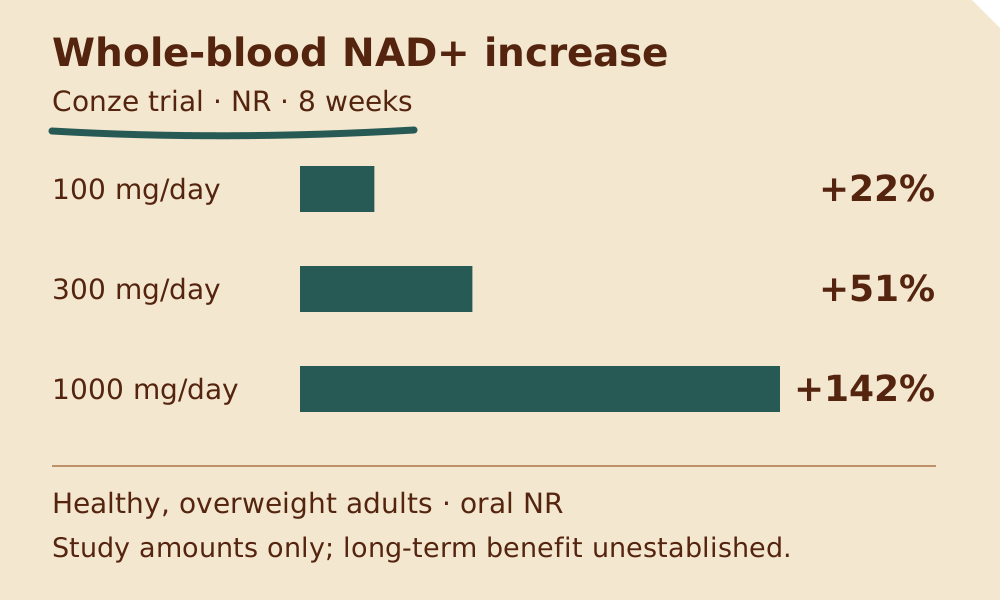
Healthy, overweight adults received NR or placebo for 8 weeks in a randomized, double-blind trial. That design concealed the assignments from both participants and researchers during testing. At 100 milligrams per day, whole-blood NAD+ increased 22%; at 300 milligrams per day, 51%; at 1000 milligrams per day, 142%. The higher levels persisted through the study.
I credit the result for its clear relationship between the tested amounts and the measured blood response. The size of the largest increase is striking. Establishing longer life or better daily function would require those outcomes to be tested too.
Tolerability observations
Participants in the same NR trial reported no flushing. Adverse events were similar to placebo, and LDL cholesterol did not rise. The researchers also found no disruption of one-carbon metabolism, the chemical work that helps supply material for DNA and other cellular needs.
Those checks give the blood result useful company. They describe tolerability under the conditions observed. A study lasting weeks gives me little basis for a lifetime safety statement.
How NR reaches the NAD+ pathway
Cells convert NR to NMN and then to NAD+. NR belongs to the vitamin B3 family, alongside niacin and nicotinamide, but those precursors enter metabolism by different routes. A result with one ingredient needs to retain that ingredient’s name.
That is why the NAD+ blood result after NR can stand on its own while leaving swallowed NAD+ and injected NAD+ as separate questions. The NMN studies examine another precursor with different clinical outcomes.
Blood and tissue measurements
A whole-blood sample gives a practical measurement. Direct sampling inside organs and muscles is harder, and the 2025 review finds tissue-specific human data sparse. The review also describes limited human clinical efficacy despite consistent blood increases.
The connection poses my next question about NR: which tissues respond, and does a measured tissue change accompany useful function over time? The biology of NAD+ and sirtuins gives reasons to investigate the question. It leaves the answer to clinical research.